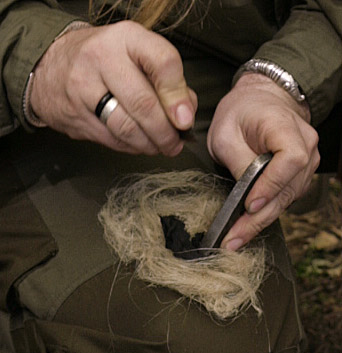
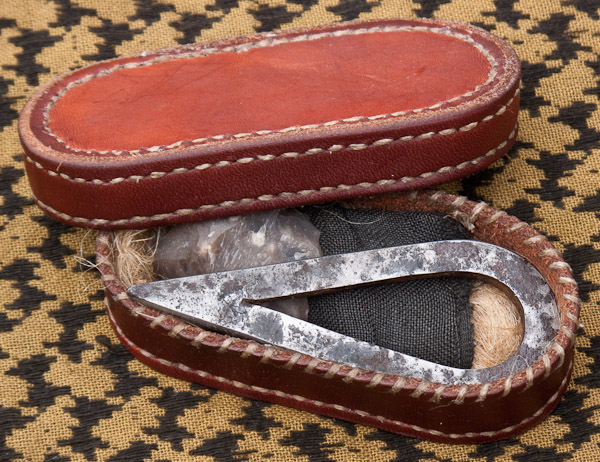
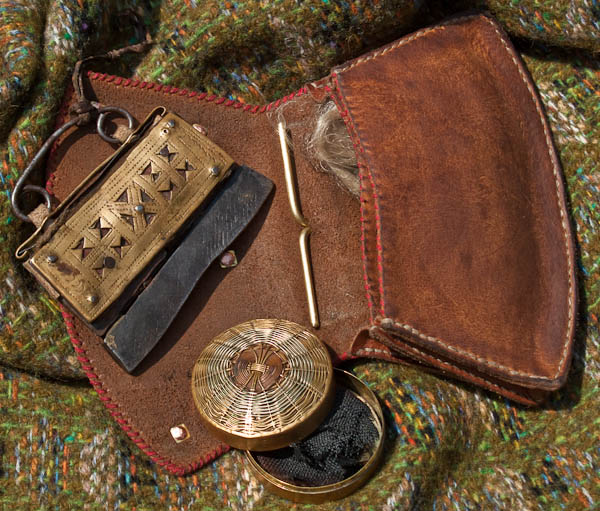
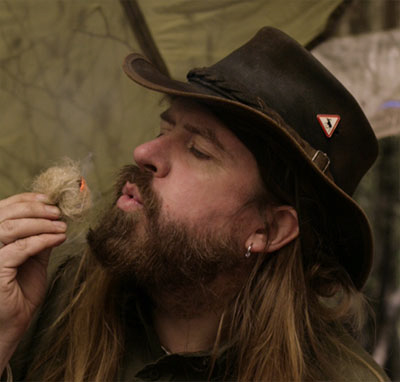
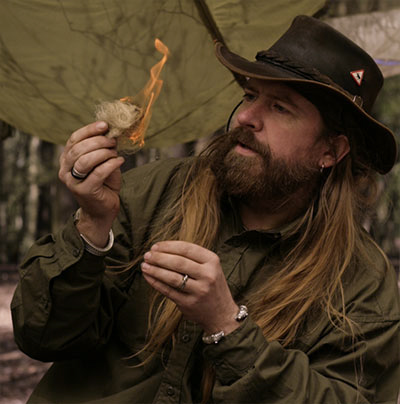
I will try to explain the methods of striking sparks with words and not pictures. If my understanding of what is happening is correct, we are using the flint to shave tiny slivers of steel from the surface of our striker. This causes heat at the moment of separation which superheats the loose slivers and they appear to us as "sparks". This being the
case the flint needs to strike the steel at an angle that planes the surface with a sharp edge. You can either hold the steel still and strike down with the flint or strike the flint with the steel. The strike should be quick but not too hard. A little practice with either method, should soon produce a good shower of sparks, if it does not, try altering the flint or strike angle slightly until it does. Now we need some tinder. There are a few ways of making tinder, I use pure linen scraps and an empty shoe polish tin to start with. Pierce the lid of your tin with a small hole and then put it into a good fire to burn off any residue of the polish. Remove the tin and let it cool. Now pack the tin with as much of your scrap linen as you can fit in without it hanging out of the edges when the lid is replaced. Return the tin to the fire in a spot where you can observe what happens.
Our tinder is going to be a form of charcoal so the object is to part burn the linen in the tin with a minimum of oxygen. We can watch the tin to see when it is ready. The first signal is a plume of smoke issuing from the hole in the tin lid, this is often, but not always, followed by a jet of flame. The heat of the fire and the amount of linen will dictate how long you will have to wait until all the smoke and
flame have ceased. Now remove the tin carefully with some tongs and let it cool. When the tin is opened you should see a blackened wad of cloth-like material somewhat smaller than you put in. This is your tinder and if you break a sheet off, you should be able to light it with the sparks from your flint and steel to create a glowing red ember. This ember should smoulder for some time and if you blow on
it it will spread faster. |