Part of the Lore and Saga family of web sitesBushcraft and wilderness skills with Gary Waidson
Ravenlore Bushcraft and Wilderness Skills

Stove Use.

There are many camping stoves on the market today using fuels ranging from hexamine to gasoline.

My personal criteria for choosing a good stove are light weight, availability of fuel and simplicity.

You may notice high speed does not enter into my decision making at all on this. I like to take my time cooking so slow heat is much more useful for my needs.

The other problem is fast stoves also tend to be  complicated in construction. That’s OK if you’re 10 minutes from a camping shop when it breaks down but that doesn’t suit me.

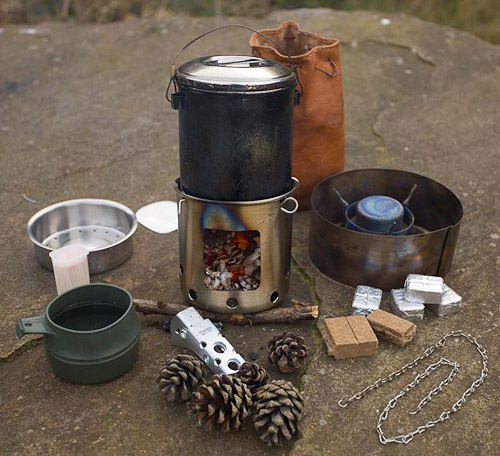
A billy can on a small alchohol stove with windshield

If I can’t use natural fuel, my usual choice is denatured alcohol or hexamine blocks depending on how light I’m travelling. I’ve tried many different brands of stove but I tend to use a combination of components from different stoves for the best result.

The picture above shows one of my billies can on an alcohol stove with a windshield. Notice the ground has been cleared and a cup of water ready to extinguish any stray flames.

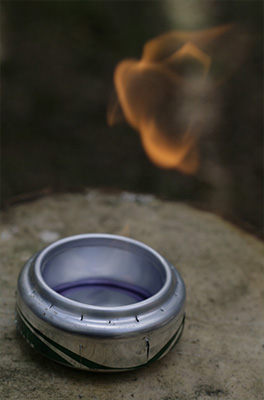
Drink Can Stove

If I am using a stove in the wilderness it is most often because there is a fire risk that prevents me lighting an open fire.

This could mean dry conditions, close woodland or very importantly, peat. Using a stove does not entirely remove the risk in such places so a little care is still called for.

Ideally I set up my stove on rock or bare earth. If this cannot be found brush away dry surface materials down to earth or damp ground. Be prepared to use some of your water to wet this down further.

Many stoves create enough heat to dry the ground and ignite loose leaf litter. a cup of water kept handy can prevent this becoming a problem.

Using a stove does not always mean having to carry fuel with you, although in some places that might be the only sustainable practice

One of my favorite stoves is a simple “Hobo stove” made from a cuttlery stand that can be used with whatever natural fuels are available

Of course the other important reason to not light a fire is that it may leave traces in an otherwise pristine environment.

For the same reason disturbed ground should also be replaced after using a stove. there should be no sign that you have been there when you leave a site and this includes not leaving food scraps and litter all over the place. If it was light enough to bring with you then take it home too.

You can see my current stove set in the projects section.


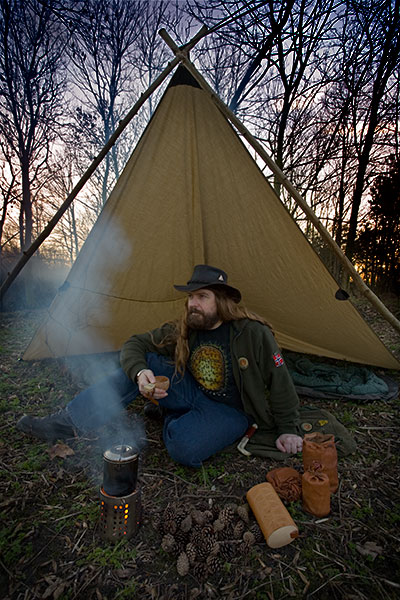
Cooking over pine cones on a Hobo Stove.

Ravenlore is a site promoting Bushcraft and Wilderness skills as a way of working, living and enjoying the wilderness with minimal impact on it’s resources. Bushcraft should be practised in a responsible manner with consideration for the environment and other people who seek to enjoy the outdoors.

Your compass for navigationFoodFireWaterShelterDirectionLinksProjectsTravelGalleryBushcraftContactPhotographyLore and Saga

Bushcraft skills complement many outdoor living pursuits such as walking, mountaineering, canoeing, hunting, fishing and in my case at least landscape photography. In fact I find the equipment suited to bushcraft often far exceeds the specification and usefulness of other high tech outdoor equipment.

Bushcraft and wilderness skills should always be practised with respect for the environment and other users of the outdoors. Leave no trace.

Shelter
Fire
Water
Food
Direction
Travel
Projects
Shelter
Fire
Water
Food
Direction
Travel
Projects
Shelter
Fire
Water
Food
Direction
Travel
Projects
Fine Art Landscape Photography
Wayland's WorldLore and SagaWaylandscapeBlack Bart's LockerWaylands World